
Marriage Green Card Evidence Checklist for Brooklyn and NYC Couples
A marriage-based green card case requires more than a valid marriage certificate. U.S. Citizenship and Immigration Services evaluates whether the marriage was entered into in good faith—not solely for an immigration benefit. Before filing an I-130 petition or responding to a request for evidence, couples should assemble a clear, accurate record showing how they have built a life together.
For couples pursuing a green card through marriage in New York City, the strongest evidence file usually presents several types of reliable records rather than relying heavily on one category. Tsiring & Feldman, P.C. helps clients in Brooklyn and throughout New York City evaluate, organize, and present documentation that reflects the genuine circumstances of their relationship.
What Bona Fide Marriage Evidence Is Designed to Show
There is no single document that proves every marriage is bona fide. Instead, the evidence should help establish that the spouses intended to create a shared life when they married and have conducted themselves as a married couple in ways that are consistent with their circumstances.
USCIS recognizes that couples have different finances, cultural practices, work schedules, housing arrangements, and family responsibilities. A newly married couple, spouses who have lived apart temporarily because of employment or immigration issues, and couples with children may each have very different evidence files. The goal is not to create an artificial picture of a marriage; it is to provide truthful, well-organized documentation of the life the couple actually shares.
Shared Residence Records
Proof that spouses live together is often important in a marriage-based immigration matter. Helpful records may include a jointly signed lease, mortgage statements, property deeds, letters from a landlord, utility bills, and official mail addressed to each spouse at the same residence.
Where possible, include records covering different points in time. For example, a lease and several utility or insurance notices can show ongoing residence more effectively than a single recent document. If the spouses do not currently share a residence, they should be prepared to explain the reason accurately and support that explanation with relevant documentation, such as employment assignments, school enrollment, military orders, or travel records.
Joint Financial Evidence
Shared financial responsibility can be persuasive because it may demonstrate the practical realities of a married household. Common examples include joint bank account statements, joint credit card statements, jointly filed tax returns, payroll records showing a shared address, jointly held property, and evidence that one spouse is an authorized user on the other spouse’s account.
Quality matters more than volume. A newly opened joint account with no meaningful activity may carry less weight than an account used consistently for household expenses. Couples should avoid submitting a large stack of repetitive statements without context. Instead, provide representative statements from across the relationship and make sure names, addresses, and dates are visible.
Insurance and Beneficiary Designations
Insurance records can help show that spouses have made practical plans involving one another. Depending on the circumstances, useful documents may include health, dental, vision, life, automobile, renter’s, or homeowner’s insurance policies listing both spouses.
Beneficiary designations on life insurance, retirement accounts, or workplace benefits may also be relevant. These records should be current and consistent with the couple’s overall evidence. If a spouse could not be added to an employer-sponsored policy due to an enrollment period or eligibility rule, retain the materials that explain the limitation.
Travel, Communications, and Photographs
Travel records may document time spent together, particularly for couples who have lived in different locations or maintained a long-distance relationship. Boarding passes, hotel confirmations, travel itineraries, and photographs from trips can be useful when they are connected to a clear timeline.
Communications may be especially helpful when spouses were separated before marriage or during a temporary period apart. Representative messages, call logs, letters, or emails can demonstrate the development and continuity of the relationship. Privacy should be considered carefully; couples generally do not need to submit every private conversation. A limited selection that is authentic, dated, and understandable is usually more helpful than an unorganized volume of screenshots.
Photographs should likewise be selected thoughtfully. Include pictures from different dates and settings, such as family gatherings, holidays, ordinary activities, and trips. Captions identifying the people, location, and approximate date can make the photographs easier to review. Photos alone are rarely enough, but they can support the broader record.
Affidavits From People Who Know the Couple
Affidavits from relatives, friends, neighbors, employers, or community members may supplement documentary evidence. A useful affidavit is specific: it explains how the writer knows the spouses, how often the writer sees or communicates with them, and what firsthand observations support the writer’s understanding of their relationship.
General statements that the couple is “in love” or has a “real marriage” are less useful than concrete details. Affidavits should be truthful, signed, dated, and include the writer’s identifying and contact information. They are ordinarily strongest when used alongside objective records, not as a substitute for them.
Major Life Records and Family Documents
Major life records can provide additional context for a shared life. Depending on the family, this category may include children’s birth certificates, school or medical records listing both parents, pregnancy-related records, emergency contact forms, joint purchases, vehicle titles, wills, powers of attorney, or records relating to shared caregiving responsibilities.
Not every couple will have these documents, and their absence does not automatically mean a marriage is not bona fide. Couples should submit evidence that genuinely applies to their lives rather than attempting to force their circumstances into a standard checklist.
A Practical Evidence-File Checklist
Before filing or preparing a response to USCIS, consider whether the file includes representative documents from the following categories:
- A marriage certificate and copies of government-issued identification, as appropriate;
- Records showing a shared residence, such as leases, utility bills, mortgage documents, or official mail;
- Joint financial documents, including representative bank, credit, tax, or property records;
- Insurance policies and beneficiary designations, when available;
- Travel records, selected communications, and labeled photographs that support the relationship timeline;
- Affidavits from people with firsthand knowledge of the marriage; and
- Major life records that reflect shared responsibilities, family connections, or long-term planning.
Each document should be legible and complete. If a document is not in English, USCIS generally requires a complete English translation with the translator’s certification. Keep originals unless USCIS specifically requests them, and retain a complete copy of everything submitted.
Organize the File Around a Clear Timeline
An evidence file should be easy for an officer to follow. Tsiring & Feldman, P.C. generally recommends organizing documents by category and then chronologically within each category. Use a table of contents, clearly labeled exhibit tabs, and concise cover explanations where a document may not speak for itself.
For example, if a couple moved during the relationship, a brief timeline can connect the earlier and later addresses to the lease, utility, and financial records submitted. If a spouse was temporarily abroad, the file can include the relevant travel and communication evidence along with a straightforward explanation. Organization does not change the facts, but it can help ensure that the facts are understood.
Address Inconsistencies Before They Become Problems
Inconsistencies do not always indicate fraud, but unexplained discrepancies can lead to questions or a request for evidence. Review names, dates, addresses, marital history, prior immigration filings, tax filings, and public records for accuracy before submitting the package.
Common issues include different addresses on identification documents, misspelled names, a joint account opened shortly before filing, or records that appear to conflict with prior applications. When there is a reasonable explanation, it may be appropriate to provide a concise, truthful statement with supporting documentation. A family-based immigration attorney can help identify issues that need clarification and distinguish harmless administrative differences from concerns that require a more careful response.
Why an Individualized Review Matters
There is no universal amount of evidence that guarantees approval. USCIS considers the totality of the circumstances, and the appropriate documentation depends on the couple’s history. A marriage green card lawyer in Brooklyn can evaluate whether the evidence is balanced, relevant, and consistent with the case rather than simply voluminous.
Tsiring & Feldman, P.C. provides I-130 petition help and representation for marriage-based immigration matters from its Brooklyn office. Clients seeking an immigration lawyer in Brooklyn or guidance on a green card through marriage in NYC can contact the firm at (718) 332-5600
to schedule a consultation and discuss the documentation available in their individual circumstances.
FAQ
How much evidence should we submit with a marriage-based green card application?
There is no fixed number of documents that fits every case. The objective is to submit a credible, well-organized collection of records from several categories that reflects the duration and nature of the couple’s shared life. Representative records across time are often more useful than large quantities of duplicates.
Do we need a joint bank account for a marriage green card case?
A joint bank account can be useful, but it is not an absolute requirement. Some couples manage finances separately for legitimate reasons. In those situations, other evidence—such as shared housing, insurance, beneficiary designations, joint purchases, travel, communications, and affidavits—may help document the relationship.
Can we submit photographs as our main evidence?
Photographs may support a case, especially when they show the couple over time with relatives and friends. However, photographs are generally most effective when combined with objective records such as financial, residence, insurance, and official documents.
What should we do if we receive a request for evidence?
Read the request carefully, note the deadline, and respond directly to the issues USCIS identifies. Do not submit unrelated material without a strategy. Because a request for evidence may raise case-specific concerns, it can be helpful to consult an immigration attorney before responding.
Is this article legal advice?
No. This article provides general educational information only and is not legal advice. Immigration laws, forms, policies, and individual facts can change the analysis. Reading this article does not create an attorney-client relationship with Tsiring & Feldman, P.C. For advice about a particular matter, consult a qualified attorney.

Marriage Green Card Evidence Checklist for Brooklyn and NYC Couples

New York Orders of Protection: What Brooklyn Families Should Know

Orders of Protection in NYC Family Court: Process, Evidence, and Safety Planning

Labor Day Weekend Accidents in New York: What to Do After a Holiday-Weekend Injury

I-751 Removal of Conditions After Marriage: What Couples Should Know

Back-to-School Custody and Child Support Checklist for New York Parents

What to Bring to Your First Divorce Consultation in Brooklyn
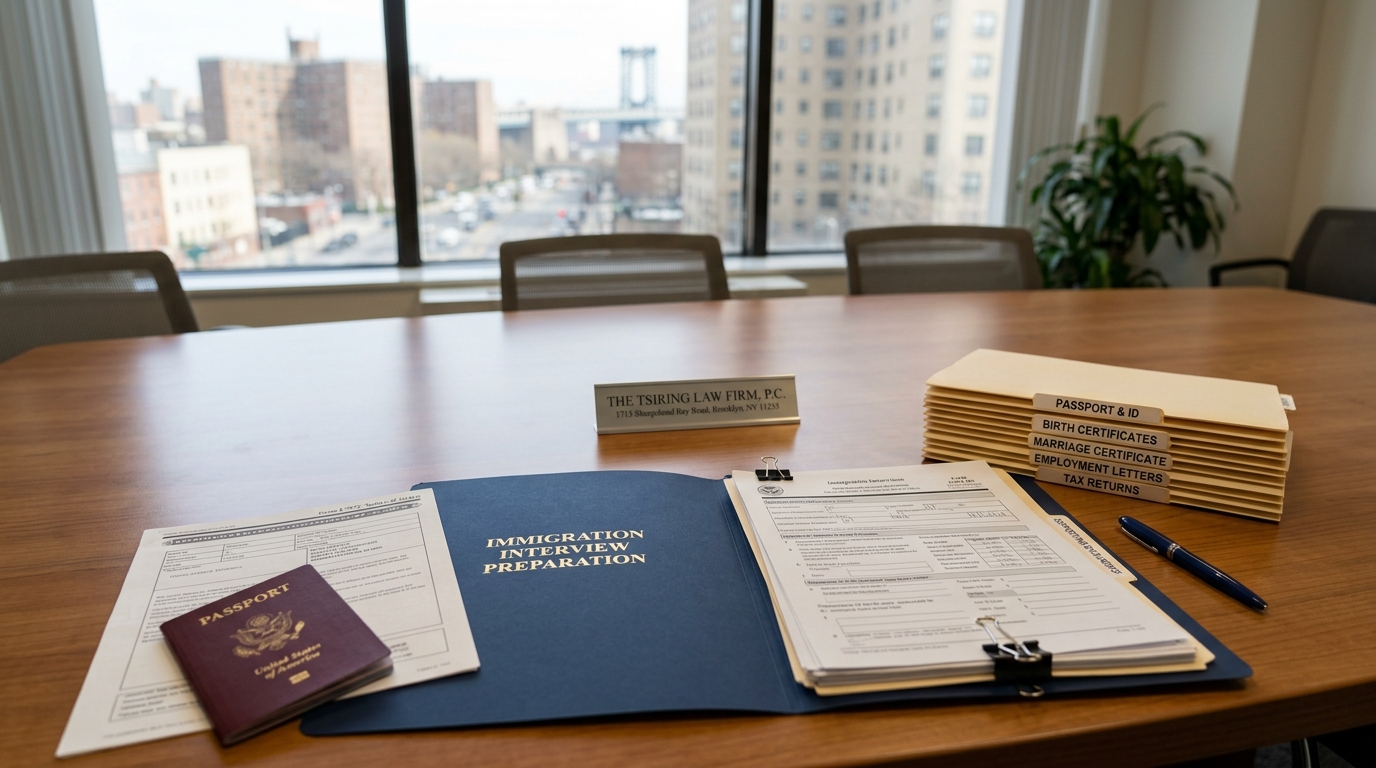
How to Prepare for a Marriage Green Card Interview in Brooklyn and NYC

Heightened Immigration Risks During Peak Summer Travel

5 Child Custody Myths Parents Should Stop Believing

Adoption FAQs: Costs, Eligibility, Legal Requirements & How a Family Law Attorney Can Help

Understanding "Out of Status" vs. Being Undocumented

Venezuelans Face New Hurdles After TPS Changes

Key Changes in USCIS Policies: Fall 2025 Update

New Policy Lets Immigration Judges Dismiss Weak Asylum Cases Without a Hearing - Новый порядок: судьи по иммиграционным делам могут отклонять слабые дела об убежище без слушания
One-Year Asylum Filing Deadline Exception for Parolees and TPS Holders (U4U and TPS for Ukrainians)
Recent Changes in U.S. Immigration Law – How Tsiring & Feldman PC Can Help

Can a custodial parent relocate with a child following a divorce or custody order in New York?
