
5 Child Custody Myths Parents Should Stop Believing
Sorting through a child custody matter in New York can feel overwhelming, especially when outdated assumptions, online misinformation, and well‑intentioned advice begin to cloud the process. As Brooklyn family law attorneys, we frequently meet parents who are unsure of what to expect, which creates unnecessary stress during an already emotional time. Understanding the difference between fact and fiction can help you make informed decisions and protect your child’s best interests.
Below, we break down five common custody myths and provide clear explanations based on how New York courts typically approach custody cases.
Myth #1: Mothers Automatically Receive Custody
Many parents assume that mothers are naturally favored in custody disputes. However, New York courts no longer operate under gender-based assumptions. Judges evaluate both parents equally and focus strictly on the child’s best interests.
Factors the court may consider include:
- Each parent’s role in the child’s daily life
- Emotional bonds and stability in each home
- Living conditions and overall environment
- Work schedules and availability
Today, fathers frequently play an equally active role in raising their children. As a result, many receive shared custody—or even primary physical custody—when appropriate. The court’s primary concern is providing a safe, supportive, and stable environment, whether with the mother, the father, or both.
Myth #2: Children Can Decide Where They Want to Live
Some parents believe that once a child reaches a certain age, they can choose which parent they want to live with. In reality, a child’s preference is only one factor among many considered by the court.
Judges may give more weight to the opinions of older or particularly mature children, but they also look at the reasoning behind the preference. For example, wanting fewer household rules is not persuasive—while staying in a familiar school or community may carry more weight.
In some cases, the court appoints a guardian ad litem (GAL) to speak with the child and represent their perspective. However, the final decision always rests with the judge, who must evaluate the full picture to ensure the custody arrangement supports the child’s long‑term well‑being.
Myth #3: Joint Custody Means a Perfect 50/50 Time Split
“Joint custody” is often misunderstood. Many parents associate it with an exact 50/50 parenting schedule, but joint custody in New York primarily refers to legal custody—the authority to make major decisions for the child.
There are two components to custody:
- Legal custody: Decision-making regarding education, healthcare, religion, and major life issues
- Physical custody: Where the child resides on a day‑to‑day basis
Parents may share joint legal custody but still have an uneven parenting schedule. The court focuses on stability, school routines, work schedules, and practical logistics—not achieving a perfect mathematical split.
Myth #4: Full Custody Eliminates Child Support
A common misconception is that receiving full or sole custody eliminates the need for child support. In New York, custody and child support are two separate legal issues.
Child support ensures that both parents contribute financially to the child’s needs, regardless of where the child primarily lives. Support calculations depend on:
- Each parent’s income
- The child’s living expenses
- Healthcare, childcare, and educational costs
Even if one parent has sole physical custody, the other parent may still be required to contribute financially. The goal is always to provide the child with consistent and stable support—not to reward or punish either parent.
Myth #5: You Can Withhold Visitation If Child Support Isn’t Paid
This misconception creates significant legal problems. Even if the other parent falls behind on child support, you cannot legally withhold visitation or parenting time.
New York courts treat these issues separately:
- Parenting time concerns the child’s relationship with each parent
- Child support concerns financial obligations
If support payments stop, the proper solution is to file an enforcement action—not to interfere with the court‑ordered parenting schedule. Blocking visitation can backfire and may be viewed as a violation of the custody order.
Courts may address unpaid support through wage garnishment, license suspension, or other enforcement mechanisms, but they will not disrupt the child’s access to a parent over financial disputes.
Need Guidance for a Custody Matter in New York?
If you are considering modifying an existing custody arrangement or are facing a new custody dispute, working with an experienced child custody lawyer in Brooklyn can help you navigate the process confidently. At Tsiring @ Fieldman P.C. , we provide clear guidance and strong advocacy in all aspects of family law, including custody, visitation, parenting time, and support matters.
You do not have to face this alone. Our team is here to help you protect your rights and prioritize your child’s well‑being.
Contact us today to discuss your situation and take the next steps toward a solution that works for your family.

Orders of Protection in NYC Family Court: Process, Evidence, and Safety Planning

Labor Day Weekend Accidents in New York: What to Do After a Holiday-Weekend Injury

I-751 Removal of Conditions After Marriage: What Couples Should Know

Back-to-School Custody and Child Support Checklist for New York Parents

What to Bring to Your First Divorce Consultation in Brooklyn
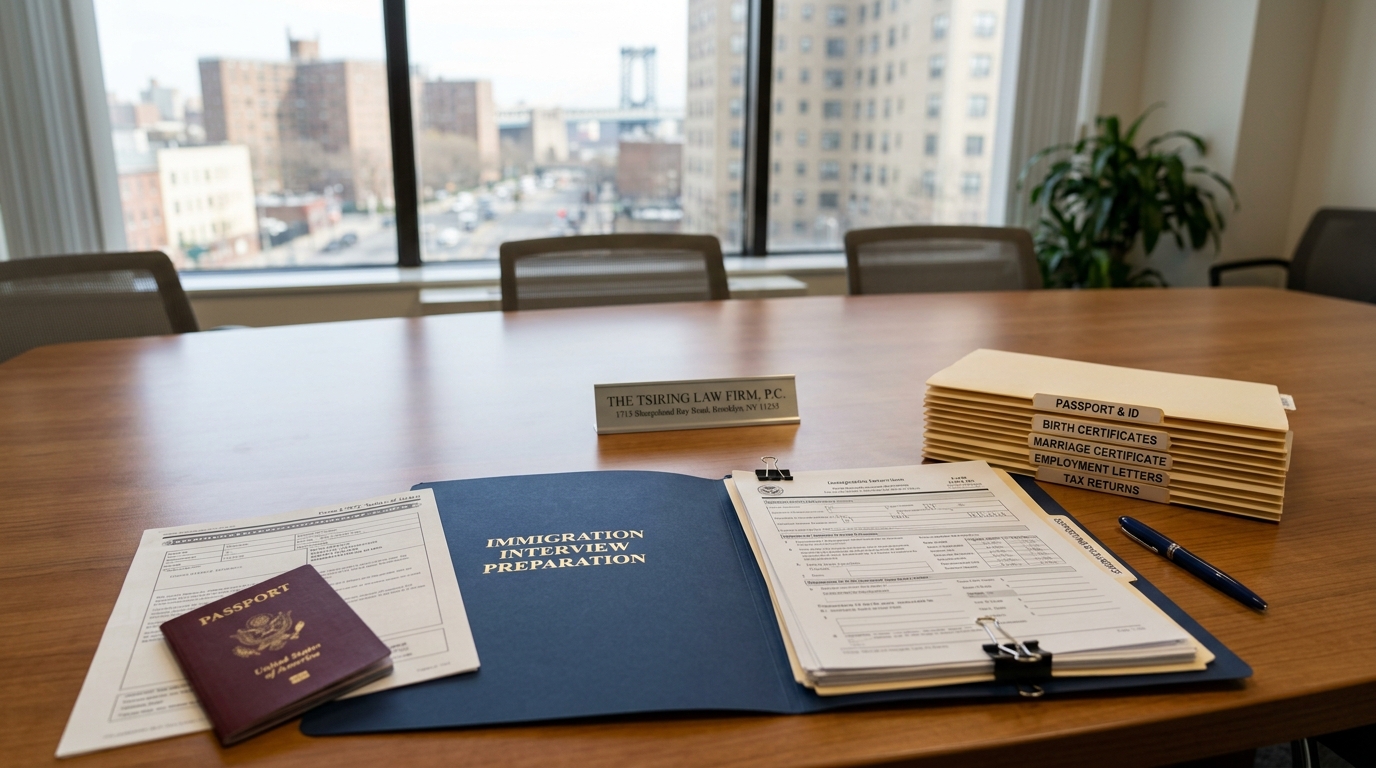
How to Prepare for a Marriage Green Card Interview in Brooklyn and NYC

Heightened Immigration Risks During Peak Summer Travel

5 Child Custody Myths Parents Should Stop Believing

Adoption FAQs: Costs, Eligibility, Legal Requirements & How a Family Law Attorney Can Help

Understanding "Out of Status" vs. Being Undocumented

Venezuelans Face New Hurdles After TPS Changes

Key Changes in USCIS Policies: Fall 2025 Update

New Policy Lets Immigration Judges Dismiss Weak Asylum Cases Without a Hearing - Новый порядок: судьи по иммиграционным делам могут отклонять слабые дела об убежище без слушания

One-Year Asylum Filing Deadline Exception for Parolees and TPS Holders (U4U and TPS for Ukrainians)

Recent Changes in U.S. Immigration Law – How Tsiring & Feldman PC Can Help

Can a custodial parent relocate with a child following a divorce or custody order in New York?
